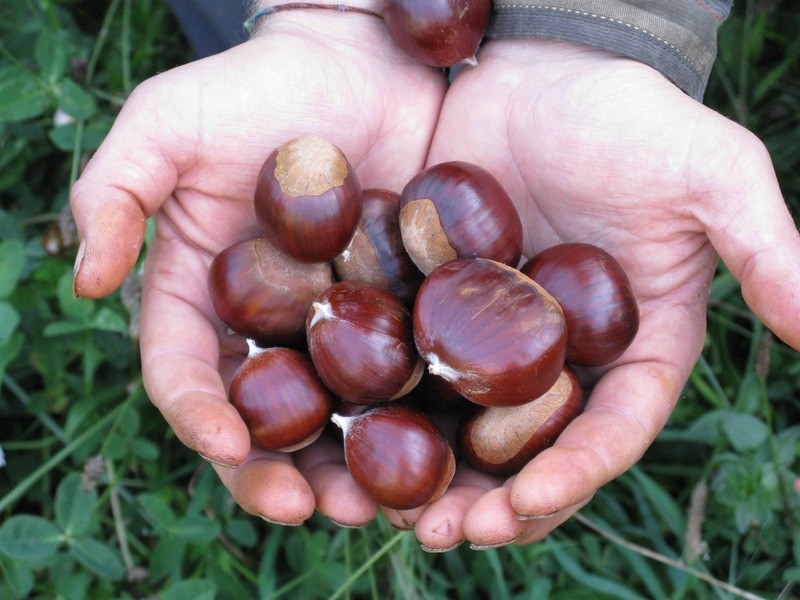
Chestnuts
Purchasing these trees places a reservation on it. We do not know how many trees we will receive. We expect 50 but often times receive less. We will Contact you and reimburse your money if we receive less trees than we should. Order of priority go to the first purchasers.
The Chestnuts are one of our favorite permaculture plants and for very good reason. They are among the heartiest and long lived of all nut crops. Tolerant of extreme cold and heat, they bloom late in April or May, missing the frost and Spring rains and ensuring a large crop every year. Once established, they are extremely drought tolerant. The nuts are used for many purposes including roasted, steamed, puréed, liquor, pastries, pasta and delectable sweet treats, candied infused with rum or other liquors, covered with chocolate... We had amazing chestnut ice cream in France. Our favorite was Rum with Marron Glacé, which are candied chestnuts. Chestnuts are highly prized in Europe and Asia! Although the Asian chestnut blight wiped out the Native American chestnuts on the eastern seaboard in the early 1900s, that pathogen needs both heat and humidity to survive. The arid climate of the Western states inhibits the growth of this devastating disease. As a result chestnuts, which have been imported from around the world, thrive in the West. Researchers from Pennsylvania State University traveled to Nevada County in the early 1960s, discovering "the world's greatest diversity of chestnut DNA is in Nevada County", due to the diligent importations of Felix Gillet. Felix brought chestnuts from France, Italy, Spain, China, Korea and elsewhere, and they became established in our area in the late 1800s.
For maximum success, plant on well drained soil with full sun exposure, protect from deer, rabbits and gophers when young and deeply irrigate until well established in 3-5 years minimum. In the West chestnuts have no insect or disease pests and are only bothered by deer and rabbits until the nuts start to fall, and then you have to watch out for the squirrels and the deer, who love to eat the nuts. Unlike other nuts, chestnuts are perishable and must be refrigerated or processed after harvest. Once established, chestnuts require no pruning.